When Words Are Hard to Find: Art as a Voice for Non-Verbal Children
Not all communication happens through words. For some children — because of developmental differences, lived experience, or individual ways of processing the world — spoken language may feel limited, effortful, or unavailable at times.
This does not mean these children are without voice.
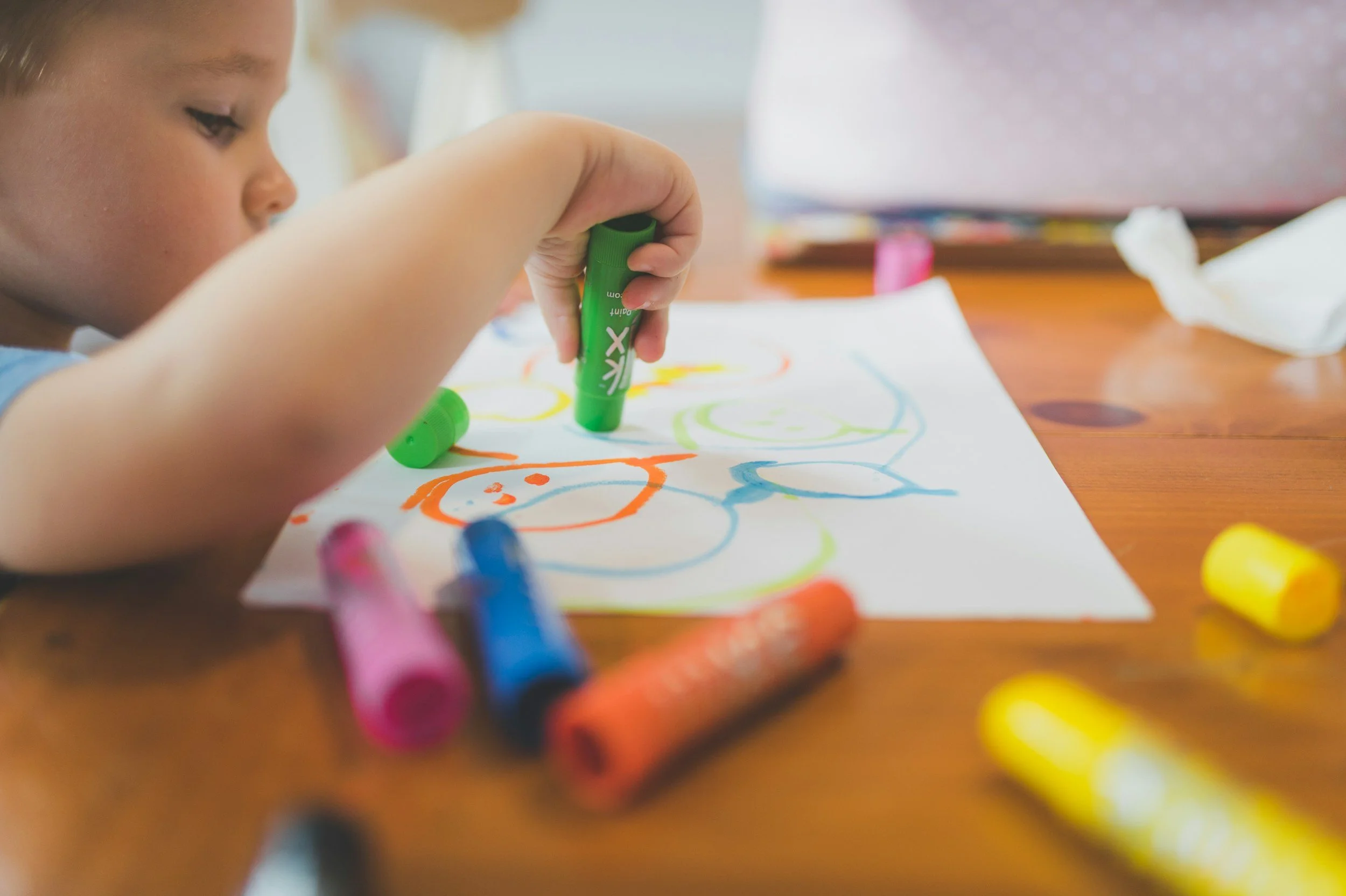
Art offers another way of communicating: through colour, shape, texture, movement, and repetition. A way to express experience, to be understood, and to be met without needing to translate feelings into speech.
Art therapy supports communication by offering multiple pathways for expression and connection, without requiring children to explain themselves verbally. Through creative process, children can share experiences, emotions, and needs in forms that feel more accessible and authentic to them.
Communication Beyond Spoken Language
In art therapy, communication is understood as broader than words alone. Children may communicate through how they move, the materials they choose, the marks they make, or the rhythms they return to.
Creative processes invite visual, sensory, and embodied forms of expression. Through action and image, children can show what matters to them, what feels overwhelming, or what feels safe — often long before they are able or willing to speak about it.
Supporting Emotional Expression Without Pressure
When emotions are difficult to name, symbolic expression can offer another way in. Art allows feelings to be expressed indirectly, without the demand to label or explain them.
Rather than asking children to find the “right words,” art therapy allows emotions to take shape in ways that feel tolerable. This can support emotional expression while preserving a sense of safety and autonomy.
Safety, Rhythm, and Predictability in Creative Process
For some children, verbal interaction itself can feel overwhelming. Art-making can offer steadiness through rhythm, repetition, and predictability — returning to familiar materials, movements, or images over time.
These patterns can support a sense of continuity and connection, allowing children to remain engaged without the pressure of conversation or performance.
Creating Shared Meaning Through Art
Artwork can be seen, noticed, and responded to by others. In this way, art therapy creates opportunities for shared meaning without requiring speech.
A child may not say, “I feel overwhelmed,” but they might fill a page with dense lines or intense colour. They may not say, “I feel safe with you,” but they might return again and again to the same image, material, or process.
These expressions are not puzzles to solve but forms of communications to be witnessed.
Honouring Different Ways of Being Heard
When spoken language is challenging or unavailable, visual, sensory, and embodied forms of communication become meaningful ways for children to share their inner world.
Art therapy honours these forms of expression rather than treating them as secondary or transitional. It affirms that communication is not limited to speech — and that every child has a voice, even when words are hard to find.
Through creative process and relationship, children are supported to be seen and understood on their own terms.
Related Resources
Important Information
This post offers a relational and reflective perspective on non-verbal and alternative communication in children. It does not provide clinical advice, diagnosis, or treatment, and is not a substitute for professional support. The reflections shared here describe ways of understanding creative expression as a form of communication, rather than prescribing specific interventions or outcomes.