Why Place Matters: Children, Connection, and a Sense of Belonging
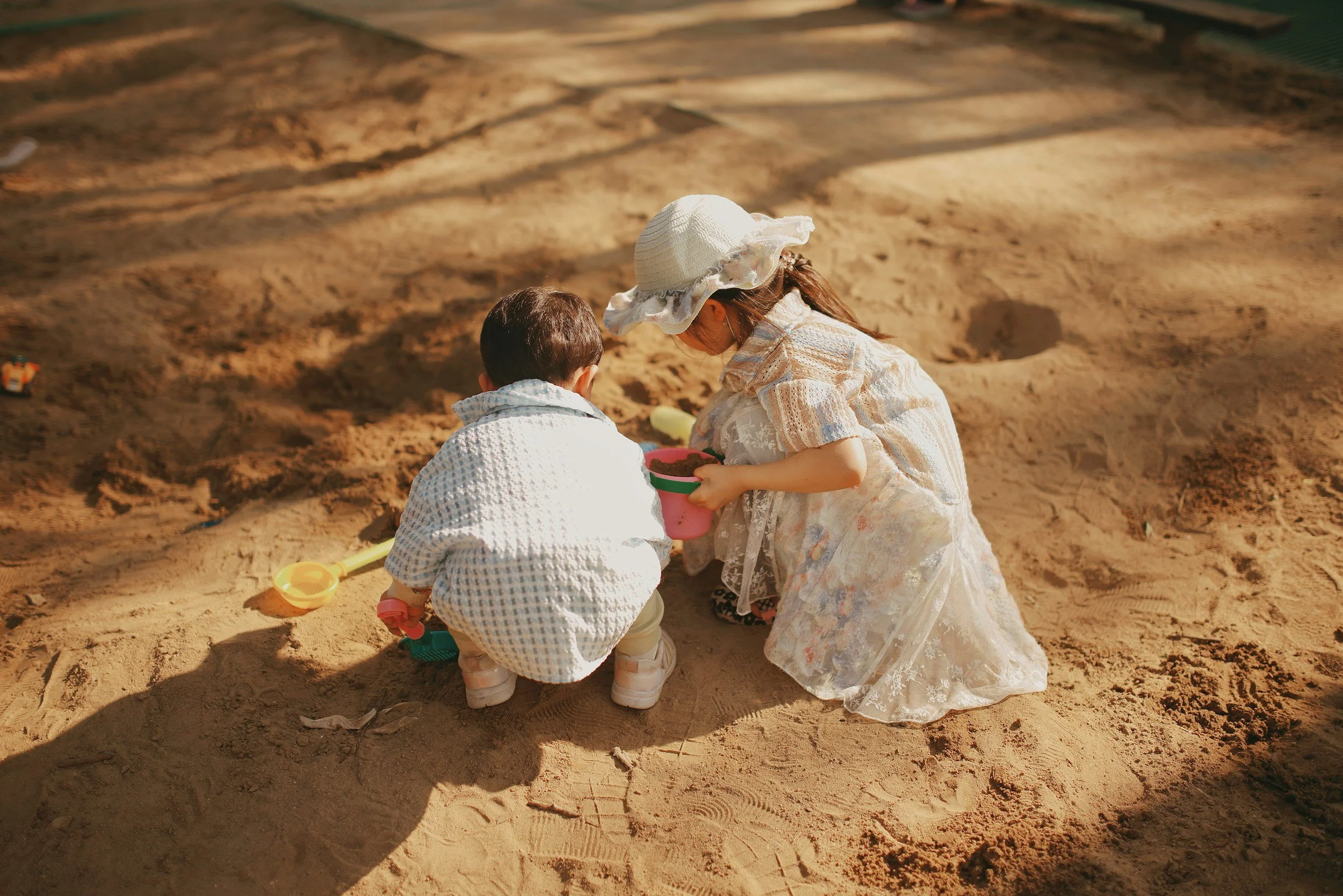
In early childhood education, therapy, and family life, place is more than a backdrop. It shapes how children feel, learn, relate, and make meaning of the world around them.
In Reggio Emilia early childhood pedagogy, place is understood as an active participant in learning — sometimes described as the “third teacher.” The environments children inhabit are not neutral. They communicate values, invite curiosity, and influence a child’s sense of belonging and safety.
This understanding of place is especially meaningful when we consider where we live, whose land we are on, and how children come to know themselves in relationship to their surroundings.
Place, land, and the Inner West
Rain & Me Children’s Therapy is located in Footscray, in Melbourne’s Inner West — an area rich in cultural diversity, migration histories, waterways, and community life.
Before Footscray became a suburb, this area was — and remains — Country, shaped by thousands of years of relationship, care, and knowledge held by the Wurundjeri Woi-wurrung and Boon Wurrung peoples of the Kulin Nation.
These lands have always been places of learning, story, and relationship. When we speak about children’s connection to place, we do so with respect for the deep, ongoing knowledge systems that have held this Country for generations.
When children are supported to develop a sense of place, this includes understanding that land is not just something we live on, but something we are in relationship with. Even very young children can begin to feel this through stories, nature connection, respect, and everyday noticing.
Why a sense of place matters for children
A strong sense of place supports children’s wellbeing in quiet but powerful ways.
When children feel connected to where they are, they are more likely to feel:
safe and oriented
grounded in their bodies and environments
curious and engaged in learning
connected to community and culture
supported in identity development
Place helps children answer early, foundational questions: Where am I? Do I belong here? Am I safe to explore?
For some children — particularly those who are sensitive, neurodivergent, or navigating stress or change — feeling disconnected from place can contribute to overwhelm, anxiety, or withdrawal. Supporting reconnection can be deeply regulating.
Helping children connect to place
Connection to place doesn’t require big lessons or explanations. It grows through lived experience and gentle attention.
This might include:
noticing local landmarks, parks, rivers, or streets
spending time outdoors and observing seasonal changes
creating art with natural or found materials
telling stories about where we live and how it has changed
slowing down enough to listen, look, and wonder together
Through these experiences, children learn that their environment is responsive, meaningful, and worth caring for.
Place, nature, and wellbeing
Nature plays a vital role in how children regulate, learn, and feel well. Time spent outdoors can support sensory integration, emotional regulation, and embodied learning.
Nature-based experiences invite children into rhythm — walking, collecting, touching, watching. These moments often support calm attention and emotional processing without needing words.
For children who struggle to articulate feelings, connection to nature can offer a non-verbal pathway to expression, grounding, and restoration.
Counselling and art therapy as place-based practices
In counselling and art therapy, place is not just physical — it’s relational and emotional.
Therapeutic spaces that honour place are:
predictable and emotionally safe
responsive to the child’s pace and interests
grounded in sensory and creative experience
connected to the child’s wider world and community
Art-making, in particular, allows children to explore their relationship to place through colour, texture, movement, and imagination. Counselling-based support can help children make sense of their experiences while remaining anchored in safety and connection.
When therapy is attentive to place — the room, the materials, the land, the community — it supports children not just to cope, but to belong.
Coming home to where we are
In a fast-paced world, reconnecting children to place is a quiet act of care. It reminds them that they are held — by land, by community, by relationships.
Whether through learning, play, counselling, or art therapy, supporting a child’s sense of place is ultimately about helping them feel grounded in themselves and in the world they are growing into.
Related Resources
Important Information
This post reflects on children’s experiences of place, belonging, and connection as they relate to wellbeing and development. It is not intended as advice, instruction, or a substitute for professional support. The reflections shared here describe ways of understanding children’s relationships with environment and place, rather than prescribing activities, interventions, or outcomes.